


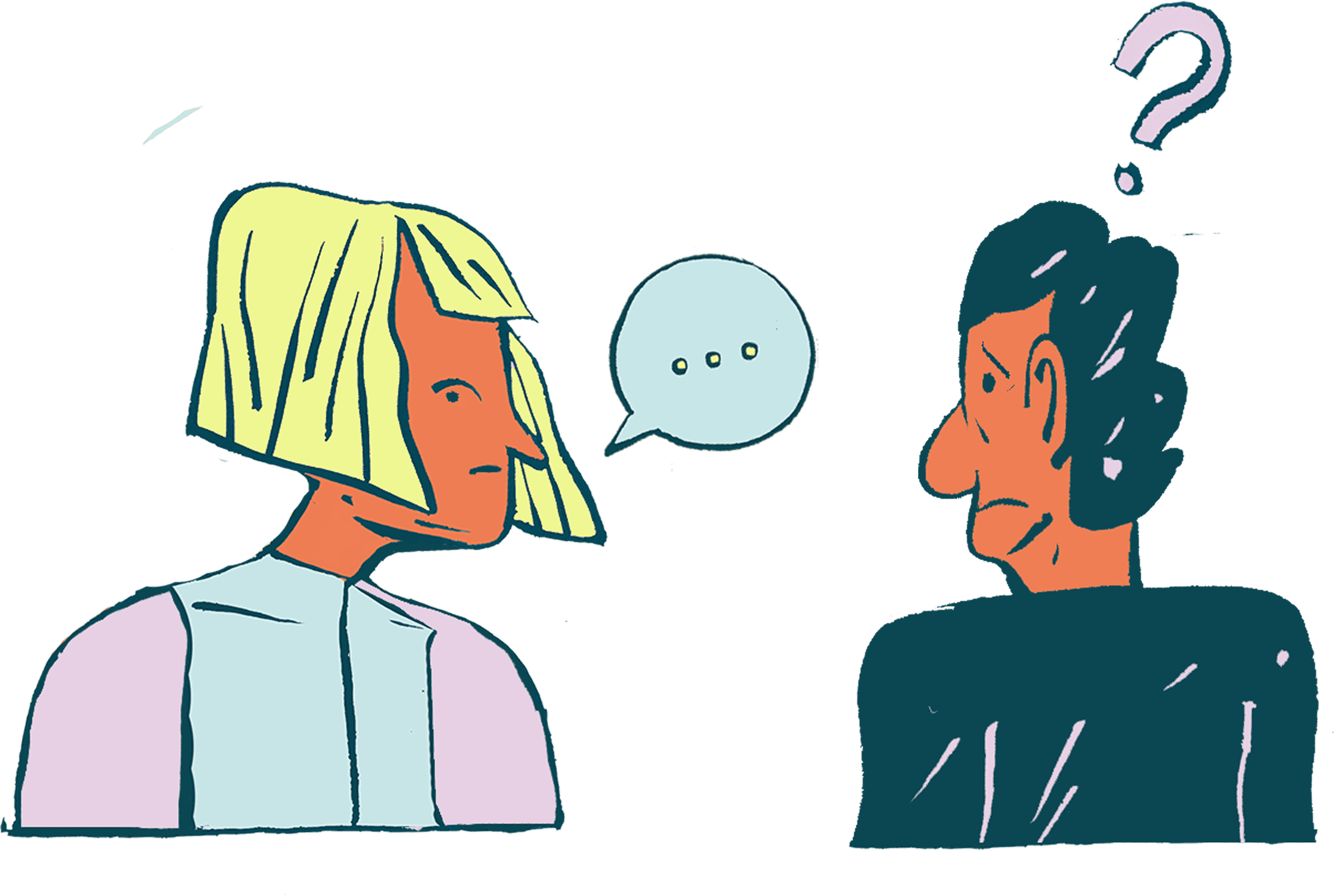
When communication in a relationship breaks down. How to improve it and argue in a healthy way?
Do you feel like communication in your relationship isn’t working the way it should? As if, during arguments, you’re each speaking a different language. One of you might get offended, and the silent treatment follows. The conflict eventually fades away but you know it will come back in full force…
Or maybe you get along well, but you can’t even remember the last time you had a deeper conversation between all the “what’s for dinner” moments. As if you’re living next to each other rather than truly together.
Does this sound familiar? Then it’s a good thing you’re here because this can be worked on. Take a look at therapists’ advice on how to improve communication and feel better in your relationship.
Without healthy communication, it simply won’t work.
It may seem that when two people love each other, everything else will somehow fall into place. But the truth is that without healthy communication, even the greatest love may not last.
Not because we need to talk about everything all the time. But because without communication, understanding, a sense of safety, and the certainty that we matter to each other slowly fade from the relationship. We start interpreting things in our own way, assuming intentions, and reacting more to our fears than to what the other person is actually saying or feeling.
That’s why communication is one of the most important pillars of a healthy relationship. It helps us:
- better understand what the other person is going through,
- avoid unnecessary misunderstandings,
- resolve conflicts in a healthy way,
- and feel safe, heard, and accepted with each other.
Even though love is essential, each of us remains an individual with a different inner world. What one person shrugs off can keep the other awake all night. Not because they are “too sensitive,” but because they have different experiences, needs, and boundaries.
And that’s where misunderstandings arise. Not out of bad intentions, but from different ways of seeing the world that we don’t talk about.

What happens when communication breaks down in a relationship
It can start subtly. From time to time, something upsets or disappoints you, but you swallow it to avoid tension. Other times, you don’t open up because you feel the other person wouldn’t understand you or might judge you. So you stay silent.
But unspoken emotions and needs build up over time. And even if they seem harmless for a long while, they eventually make themselves heard. Sometimes as an outburst, other times as quiet emotional distance.
Arguments then keep happening again and again over small things. You feel misunderstood, frustrated, or lonely, even though you’re not alone. And little by little, you start drifting apart.
It’s no coincidence that up to 65% of relationships end due to insufficient communication. At the same time, it’s one of the most common topics people bring to therapy.
The most common communication mistakes: What you should avoid saying in a relationship
The first step toward healthier communication in a relationship is noticing the patterns that have been undermining it over time.
American psychologist John Gottman divided them into four main categories, famously known as the Four Horsemen of the Apocalypse. If you recognize yourself in any of them, don’t take it as a failure. Awareness is the most important first step and the point from which real change can begin.
1. Criticism
This isn’t about criticism in general, but about criticism aimed at your partner’s character. Instead of focusing on what actually happened, you attack who the other person is.
Complaints are okay as they’re a natural part of healthy communication. You can say something like, “It bothers me that you didn’t empty the dishwasher like we agreed.” The problem arises when a single situation turns into a judgment of the other person’s entire personality: “You never think about others, you’re so selfish. You never do anything around the house, there’s no way to function normally with you.”
This kind of criticism quickly puts the other person on the defensive. Instead of hearing what’s bothering you, they hear that they are a bad person. And at that point, it’s no longer about solving the problem, but about protecting themselves.
2. Contempt
While criticism attacks a partner’s personality, contempt goes even further. It strikes directly at their dignity and sends the message: “I’m better than you.” It often shows up as mockery, irony, sarcasm, insults, or mimicking a partner. According to psychologists, it’s the most destructive communication pattern in relationships.
Contempt can sound like this: “So you’re not feeling well? Of course you poor thing, right? You work sooo hard all day, sitting at a computer must be exhausting.”
These words don’t hurt only in the moment. Over time, the person on the receiving end stops feeling safe and respected. And without respect, it’s very hard to maintain closeness.

3. Defensiveness
Defensiveness often comes as a reaction to criticism. We try to protect ourselves from feelings of guilt, justify our behavior, and show that “it wasn’t that bad.” But this kind of defense usually has the opposite effect: the other person doesn’t feel heard or understood, and the conflict can escalate even further.
One partner might ask, “Why didn’t you reply to my message today?” And the other responds defensively: “Sorry, but I didn’t stop all day. It’s not like anything terrible happened. You don’t reply all the time either, so don’t make such a big deal out of it.”
Instead of responding to how the other person feels, the conversation shifts toward justifying, downplaying, or counterattacking.
So what’s the healthier alternative? Acknowledge your part of the responsibility and show understanding. For example: “I’m sorry, it completely slipped my mind. I’m sorry you felt overlooked because of it. I’ll message you sooner next time.” This doesn’t mean taking the blame for everything. It means showing the other person that you take their feelings seriously.
4. Stonewalling (withdrawal from communication)
Sometimes one of you becomes so overwhelmed by the conversation that they withdraw and stop communicating altogether. They may go silent, respond with one-word answers, ignore the other person, pretend to work, or simply leave the room.
At first glance, this can look like disinterest or punishing the other person with silence. In reality, it’s often a defensive response of the body that can no longer handle the pressure. Emotions become too intense, and the person shuts down just to cope.
If you notice yourself “switching off” during a conflict, try taking a conscious break, but name it. For example: “I’m feeling really overwhelmed right now and need to calm down. Can we come back to this in a bit?”
It’s important to let the other person know that you’re not avoiding communication, you’re just taking space so you can return calmer and more present.
What to do when you’re on the other side and your partner stops communicating
When the other person goes silent in the middle of an argument or even during an ordinary conversation, it can be incredibly frustrating and difficult. You may feel a wave of anxiety, your mind filling with thoughts like “What did I do wrong?” Or it may make you even angrier. What can you do in that moment?
- Try not to push. It’s natural to want answers, but the more you pressure the other person to communicate, the more likely they are to shut down even further. Often, they’re not doing it to hurt you, but because they feel overwhelmed and don’t know how to get out of it.
- Offer understanding. Let them know that you respect their need for silence while still wanting connection. For example: “I understand that you’re feeling overwhelmed. We can talk about it later. Please let me know when you have the energy.”
- Don’t forget about yourself. Understanding is incredibly important, but your own needs matter too. If you’ve given your partner time and they still refuse to talk about anything, it’s okay to name that. Just do it without blame. Focus on yourself and your feelings: “It hurts me when you don’t talk to me. I don’t know what’s going on, and it stresses me out. I need you to communicate.”
- Suggest a different form of communication. Maybe they feel embarrassed or struggle to put things into words. What about trying a voice message or writing a letter? It’s not ideal, but it can be a first step.
- Consider couples therapy. If communication issues keep repeating and you can’t seem to break the pattern, therapy can help uncover the underlying causes and work through them. You may learn something new about each other and grow closer again.

The silent treatment: When silence is okay and when it starts to harm a relationship
A short pause to calm down can be healthy and sometimes even necessary. It helps emotions settle and gives both people space to breathe before saying something they might later regret.
Long-term silence, however, hurts a relationship more than it protects it. Ignoring each other creates uncertainty, anxiety, and a feeling of rejection and it often hurts more than an open argument. We start asking ourselves questions like: “What did I do wrong?”, “Should I apologize?”, “Do they still care about me?” And the longer the silence lasts, the deeper these fears grow.
How can you break the silent treatment? Try starting calmly and without blame. Let the other person know that the silence is hard for you, that you miss the connection, and that you want to talk. For example, you might say: “I’m sorry about how we argued yesterday. I’d like to talk about it again.”
How to recognize when silence turns into punishment and manipulation
The silent treatment doesn’t always mean that your partner simply needs some time alone. Sometimes, it can be a form of punishment or manipulation.
You should pay attention if:
- silence keeps repeating after conflicts,
- your partner doesn’t respond to your attempts at a calm conversation,
- they refuse any communication until you apologize or admit fault,
- and you feel like you have to guess what exactly is expected of you.
Living in such a relationship can be extremely exhausting and hurtful. If you feel that silence is long-term undermining your sense of security or forcing you to suppress your own needs, don’t brush it off. Read our article on how to recognize a toxic relationship, or talk it through with a therapist.

How to argue properly and improve communication in a relationship
Conflicts are unpleasant, but they’re a natural part of every relationship. It’s very unlikely that two people who spend a lot of time together will agree on absolutely everything, don’t you think?
The sentence “We have a perfect relationship, we never argue” often hides unspoken emotions and unmet needs. And those tend to build up over time.
Conflicts themselves aren’t the problem. The problem is how we handle them. Take a look at practical advice from our psychotherapists on how to argue in a healthy way and improve overall communication in your relationship.
1. Listen to each other
Communication isn’t just about words. It’s mainly about active listening. That doesn’t only mean letting the other person finish speaking, it means truly trying to understand what they’re saying and how they feel, without already preparing your response in your head. Simply feeling heard can move a relationship forward in a big way.
2. Start sentences with “I”
Try to avoid sentences that begin with “you never” or “you always.” They often sound accusatory, even when that’s not your intention. When you speak from your own perspective, you give the other person less reason to become defensive and you increase the chance that they’ll really hear and understand you.
Instead of “You’re always on your phone and never talk to me,” try:
“I’m sad that we don’t spend much time together. Sometimes I feel like your phone is more important than me. Can we talk about it?”
3. Don’t look for someone to blame, look for solutions
When we focus on who’s at fault, we usually end up digging even deeper into our positions. Instead of asking “Who messed up?”, try asking “What can we do differently next time?” Shifting from blame to solutions helps you feel like you’re on the same team, not against each other.
4. Choose the right time and place
Not every topic is best discussed when one of you is hungry or already half asleep. Find a moment when you’re both ready to talk, and really be there for each other. Put your phones away, make eye contact, and listen.

5. Don’t assume bad intentions
In heated moments, it’s easy to think, “They’re doing this on purpose.” But often, that’s not true. Try to assume that your partner isn’t your enemy and isn’t trying to hurt you. They simply have a different perspective. Even this small shift in mindset can significantly calm communication.
6. Check that you understand each other
It often happens that we respond to what we think the other person said, rather than to what they actually meant or how they feel. This easily leads to unnecessary misunderstandings. Try asking clarifying questions during the conversation, such as: “What did you mean by that?” or “If I understand you correctly, what bothered you most was…”
7. Stick to one topic
In an argument, it’s easy to slide from one issue into ten others. But once you start bringing old grievances and long-resolved situations into the conversation, the conflict quickly becomes tangled and any solution drifts further away.
Try to focus on what’s happening here and now. Dealing with one specific issue is much easier (and fairer) than opening up an entire list of past resentments.
8. Take a break when emotions run high
When you feel that emotions are starting to speak louder than you are, it’s okay to take a break. Not to avoid the problem, but to prevent unnecessary hurt. What matters is naming the pause and making it clear that you want to come back to the topic. A short step back can help calm emotions and create space for a calmer, more meaningful conversation.

What if you’re stuck and can’t find a solution?
Sometimes the problem isn’t that you don’t know how to talk to each other, but that you’re looking for agreement where understanding is needed instead. Many conflicts don’t have one single “right” solution. Each of us enters them with different needs, fears, or values and those don’t always align (which is okay).
In moments like these, it helps to step away from the question of “who’s right” and look beneath the surface. Often, we’re not just arguing about a specific decision, but about what that decision represents to us.
When it comes to moving, for example, one of you may primarily need stability and security, while the other longs for change and growth. As long as these needs remain unspoken, you can keep going in circles. But once you bring them to the surface and truly hear each other, space can open up for a solution that makes sense to both of you.
How to start a conversation after an argument and make up
Maybe you didn’t reach any solution and the argument got a bit out of hand. Even so, reconciliation is incredibly important for a relationship. It doesn’t mean changing your opinion or admitting fault. It means showing the other person that they matter to you more than the conflict itself and that you care more about them than about being right.
Starting a conversation after an argument doesn’t have to be complicated. Sometimes a simple sentence is enough, like: “I’m sorry about how we argued yesterday,” or “I’d like to talk about it again when we’re both calmer.”
That first step is often the hardest, but it often brings the greatest relief. It helps restore a sense of closeness and safety in the relationship.
What to do when your partner gets offended and sulks
Your partner storms out, slamming the door, convinced they’re right and that you should be the one to apologize. What now?
- Give them space. A bit of silence after the storm can be helpful. Let your partner process their emotions. You can use that time to gain some clarity yourself as well.
- Consider whether you may have made a mistake. Admitting it isn’t easy, but we all make mistakes and there’s no shame in that. Think about why your partner got offended. If you feel an apology is appropriate, say it and offer reconciliation.
- Talk it through. If you don’t feel an apology is needed, you may have simply misunderstood each other. Try opening the conversation differently and describe how you feel without blame. Ask your partner how they’re feeling. Show that mutual respect matters to you and that your goal isn’t winning, but finding a solution together.
If your partner still refuses to communicate, uses silence as punishment, and the silent treatment has been going on for a long time, don’t let the issue fade away. As mentioned above, this can be a form of manipulation and no one deserves to be treated that way. You can talk it through in therapy or suggest couples therapy together.

How to get a partner who doesn’t want to talk to open up?
Maybe you’re trying to communicate openly and respectfully, yet you still feel like you talk with your partner less than you need. They reply briefly, avoid deeper topics, or steer clear of them altogether. What can you do?
A reluctance to talk doesn’t necessarily mean a lack of interest. Sometimes it’s due to introversion; other times it comes from childhood experiences where it wasn’t safe to talk about emotions, or simply from a habit of brushing problems aside rather than addressing them.
So how can you help the other person open up and go deeper?
- Give them more time. Some people need longer to find the courage to talk about their feelings. If you pressure them, they may shut down even more. At the same time, it helps to explain why a deeper conversation matters to you. For example: “It’s important to me that we understand each other. We don’t have to talk about it right now, but I’d like to come back to it.”
- Create a safe, non-judgmental space. When a partner feels they’ll be judged, corrected, or that they might “say something wrong,” opening up becomes difficult. Try listening without interrupting, avoid dismissing their feelings, and show that they can share anything with you.
- Try a different form of communication. Face-to-face conversations don’t work for everyone. Some people express themselves better in writing – through a message, an email, or even a short note on the fridge. It’s not an ideal long-term solution, but it can be a first step toward talking about deeper topics.
- Avoid reproaches. Instead of “Why don’t you talk to me?”, try describing how you feel: “I’ve noticed that we don’t talk much lately, and it makes me feel sad.”
Bring the topic of communication into therapy
You don’t have to handle it on your own as a couple. If communication isn’t working well right now, it doesn’t mean all your shared days are over. A therapist can help you find common ground, deepen your communication, and look for solutions you may not have seen before.
At Hedepy, among many verified psychotherapists, you’re sure to find the right one. To make it easier, we’ll recommend the most suitable therapist for you based on a 5-minute test. You can have your first session in just a few days.
Thinking about therapy?

My First Therapy: How to Prepare and What to Expect

What is psychotherapy? And who is it for?

Does online therapy really work? Isn't face-to-face better?
Explore options


