


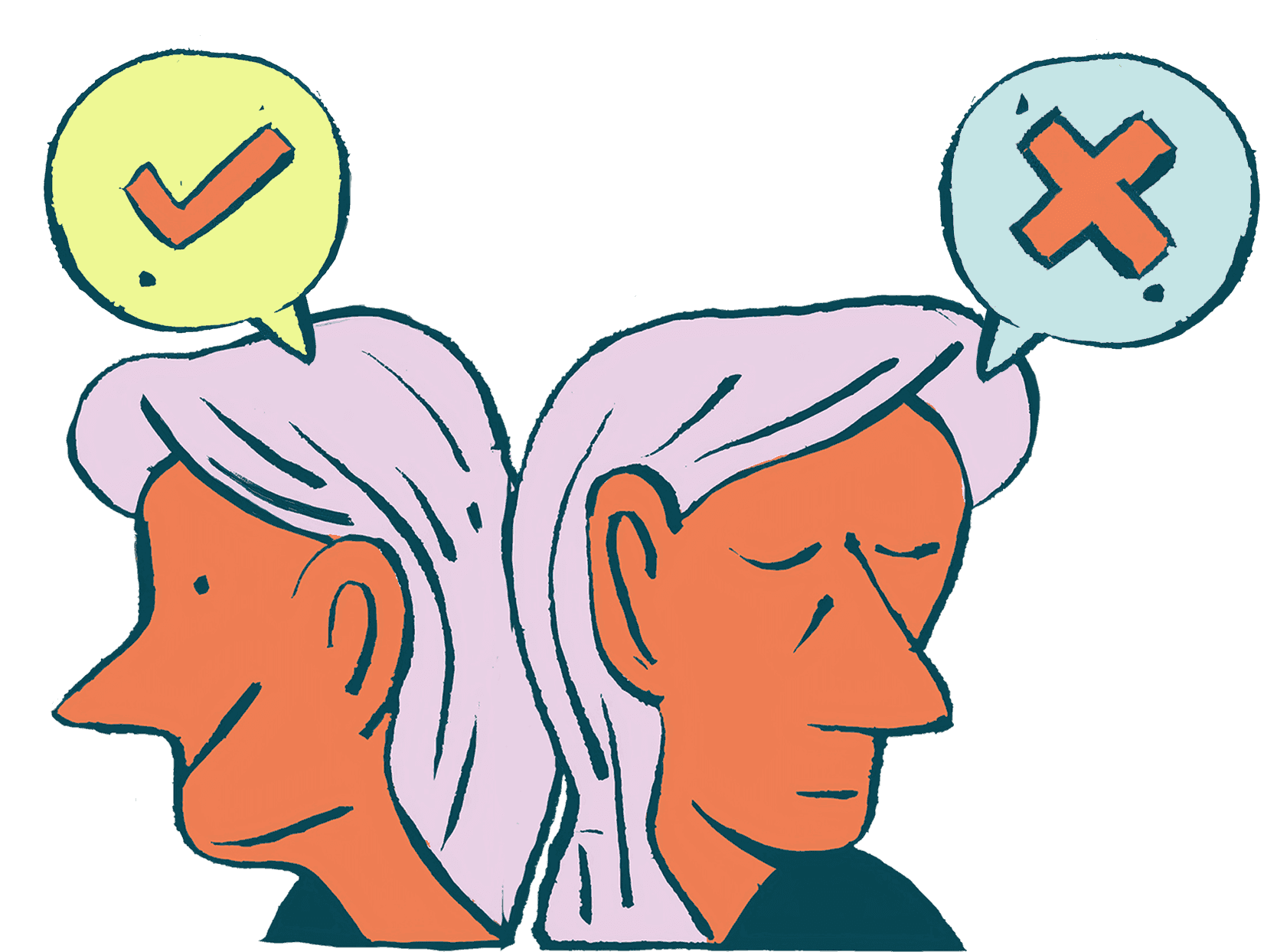
“I’m fine.” The tiny lie that’s taking a massive toll on our mental health
We say it on autopilot. But what if it’s doing us harm? Discover why honesty about our emotions is tough, yet vital for our mental health.
How often does someone ask you how you’re doing? And how often do you just blurt out “fine,” “good,” or some other autopilot answer without even thinking?
But is that really the case? If it is, we’d love to know your secret to a cloudless life. :-) But if it’s not, this innocent-looking little lie might be doing you way more long-term harm than it seems.
Let’s look at it through a psychological lens. Because being honest with others and especially with yourself is absolutely crucial for your peace of mind.
When “I’m fine” becomes a reflex
I’m fine. Work is good. I’m doing great, I don’t need any help, everything’s totally OK.
That’s just what people say, right? It’s normal. So we say it too. We keep saying it until, eventually, we can’t even tell when we’re actually speaking the truth anymore.
Sure, it’s completely fine not to unpack your heavy thoughts to your uncle at a family dinner, or to your colleagues during a quick status meeting. Sometimes, “I’m good” is just a shield to protect our privacy.
But when we start handing out these robotic, one-size-fits-all answers to everyone around us without a second thought, we’re sliding into a pretty dangerous zone.

Why is it so hard to actually be honest?
Maybe you see yourself in this, too. Most of us do the exact same thing, filtering out what’s actually going on. But why? There are a few standard reasons:
- We just need to function. Admitting there’s a problem means having to deal with it, which might slow us down. And who has time for that? Deadlines won’t move themselves, and the rent won’t pay itself.
- We don’t want to look weak. Everyone at work seems to have their life together, Instagram is flooded with smiles, the boss is pushing for results, and Jane somehow squeezes in a gym session before clocking in. We feel like our struggles would just make us the odd one out.
- We’ve been burned before. Maybe you tried opening up a few times, but it didn't go well. The other person brushed your feelings off, judged you, or just didn’t get it at all. So, you learned to keep them inside, nice and safe under lock and key.
- We don’t want to be a burden. We convince ourselves that nobody really cares about our issues, and that we’d only annoy our loved ones or ruin their good mood.
- We’ve simply gotten used to it. Stress and exhaustion have been our daily bread for so long that it’s started to feel normal. We tell ourselves, “Well, I guess this is just what life looks like.” Plus, other people have it way worse, right? So what do we have to complain about?
Now, imagine all of this was playing out inside the heads of the people closest to you. On the outside, they’d act like everything’s cool, while bubbles of stress are boiling over on the inside. Wouldn't you want to know how they’re actually doing? To give them a hug, offer some support, and bring over a tub of ice cream? Trust us, your loved ones feel the exact same way about you.
According to our survey done in the Czech republic, a staggering 65% of us avoid openly sharing our feelings out of shame and fear of how others might react. Yet, nearly 80% of us have personal experience with mental health struggles that have disrupted our daily lives. And honestly, that is a terrible shame.

Being honest about our emotions directly shapes our mental health
And it’s not just about being honest with the people around us, as vital as that is. More often than not, we aren’t even honest with ourselves. Yet, research shows that acknowledging our real emotions directly shapes our mental health. Why is that?
- Bottling up emotions will boil over sooner or later. Your feelings won't just vanish; they just quietly pile up inside. Eventually, they’ll break through in the form of an angry outburst, anxiety, insomnia, or complete burnout. And that’s what can really knock you off your feet for a much longer time.
- Naming your feelings takes away their edge. When we admit we’re not okay and put a name to our emotion, the problem doesn’t grow, the opposite happens. More often than not, it brings a sense of relief, as shown by research like this study. Try saying how you feel today out loud in the shower, or write it down on a piece of paper. Just name it and give it a moment of your attention.
- Sharing your emotions deepens relationships and cuts down stress. Relationships with our loved ones have a massive impact on how we feel. They give us a sense of safety, trust, and a shoulder to lean on, while triggering those much-needed happy hormones. But relationships can’t have any real depth if we aren’t honest with each other, if we don’t share what’s actually going on in our lives, and if we don’t give each other the space to help out.
Quiz: How honest are you with yourself?
You might be telling yourself that your problems aren’t even worth mentioning. That they’re just not that big of a deal. But could it be that your threshold for what you can handle is just shifting, little by little? Maybe you’ve just gotten used to running on autopilot.
Take a quick quiz to help you see things a bit more clearly. Answer YES or NO to the following questions:
- Do you feel like you’re functioning just fine, but you haven't felt real joy or happiness in ages?
- Do you tell yourself that other people have it way worse, so you have no right to complain?
- Would your closest friends or family be shocked if they could see inside your head right now?
- Do you feel like constant stress and exhaustion just come with the territory of life? After all, everyone's dealing with it.
- Do you struggle to put into words what you’re actually feeling?
- Do you feel a constant pressure to always be in a good mood and full of energy?
- Do you tell yourself that you don't want to burden others with your “problems”?
The more times you answered YES, the more it’s a sign that it might be time to give yourself permission for a tiny change. No, not another task on your to-do list. Just a moment to actually notice how you feel inside.
Let’s look at how to do that. Our therapists have plenty of practical advice for you.

How to give yourself permission to “not be okay”: Practical advice
You don’t need to immediately pour your heart out to a colleague at work. Sometimes, a tiny shift in perspective is all it takes for that “I’m fine no matter what” filter to slowly start fading away.
1. Try to notice and name your emotions
Schedule a few quick “checkpoints” throughout your day, maybe during your lunch break or in the shower at night. Just tune in to how you’re feeling at that exact moment. You don’t have to try to change the emotion, nor do you need to question whether it’s “justified.” Just notice it, catch it, and name it.
2. Give yourself permission to feel the negative stuff
If you notice that you’re not doing great, try to just accept it, at least a little bit. We often have a tendency to instantly squash negative feelings and replace them with something positive. Because who has the time, right? Or maybe it just feels like a weakness.
Start slow. Instead of telling yourself “it’s nothing,” try “it’s not the end of the world, but it doesn’t make me feel good.” Instead of “I need to pull myself together, there’s no time for this,” try “I’ll come back to this tonight when things quiet down.” Give yourself at least a tiny bit of breathing room so those bottled-up emotions don't keep piling up.
3. Try to push back against people pleasing
If you often feel like you’d only annoy others with your problems, people pleasing is probably a topic for you too. But it’s something you can absolutely work on. Explore our methods on how to break free from people pleasing. You’ll see that opening up to others gets a lot easier after that.
According to data, nearly half of us identify as people pleasers, with women being more prone to it than men.

4. Talk to yourself like you would to a friend
If your sister or best friend were going through a tough time, you definitely wouldn’t just brush it off. Yet, you are the closest person you have! You’re the one you spend every single minute of your life with. So why not turn your own head into a safe space where you can actually find support and understanding?
If self-love feels like a bit of a foreign concept to you, our practical guide to self-love will help you find your bearings.
5. Slowly start ditching the word “fine”
Save it for the moments when it’s actually true. The next time you’re feeling down and someone asks you how you’re doing, try answering a bit more honestly. Like: “I’m a bit tired,” or “Things are a bit hectic right now, but I’m hanging in there.” You don’t have to explain a single thing if you don’t want to.
6. Open up to someone close to you
Next time someone from your inner circle asks you how you are, take the opportunity and tell them how it really is. You don't need a detailed explanation ready; just telling the truth is enough. It’s completely okay to admit that you don’t fully understand your feelings yourself yet, but you just wanted to share them with someone.
If you’ve been keeping things to yourself until now, opening up about deeper topics can feel pretty daunting. In our article How to tell your loved ones that something is bothering you, you’ll find useful, practical tips, like how to start a heavy conversation and what to do if their reaction isn’t quite what you hoped for.
Don’t carry it all alone. Opening up helps!
Maybe you feel like you don’t even have anyone to turn to. Or the thought of how they might take it terrifies you. In therapy, there is no such thing as a “problem too small.” It’s a safe space where you can open up about absolutely anything. Even if it’s just to say that you don’t really know what’s wrong, you just don’t feel good. You’ll see that together with a therapist, you’ll figure it out eventually.
At Hedepy, we want to make sure you and your therapist are a perfect match. That’s why, based on a quick 5-minute matching quiz, we’ll recommend the best fit out of our many certified professionals.
The sessions take place online, right from your favorite armchair, and you can book one in just a few days.
Give yourself permission to not be okay all the time.
Thinking about therapy?

My First Therapy: How to Prepare and What to Expect

What is psychotherapy? And who is it for?
Does online therapy really work? Isn't face-to-face better?
Explore options


