


Imposter syndrome: The imposter syndrome test and how to overcome it
That project only worked out because everyone helped me. They must have hired me by mistake. They'll soon realise I don't actually know anything and fire me.
Does this sound familiar? It seems like imposter syndrome has crept up on you too. How do you tell it apart from real incompetence, and what can help you finally start believing in your own abilities? Let's take a look at some advice from psychotherapists.
What is imposter syndrome?
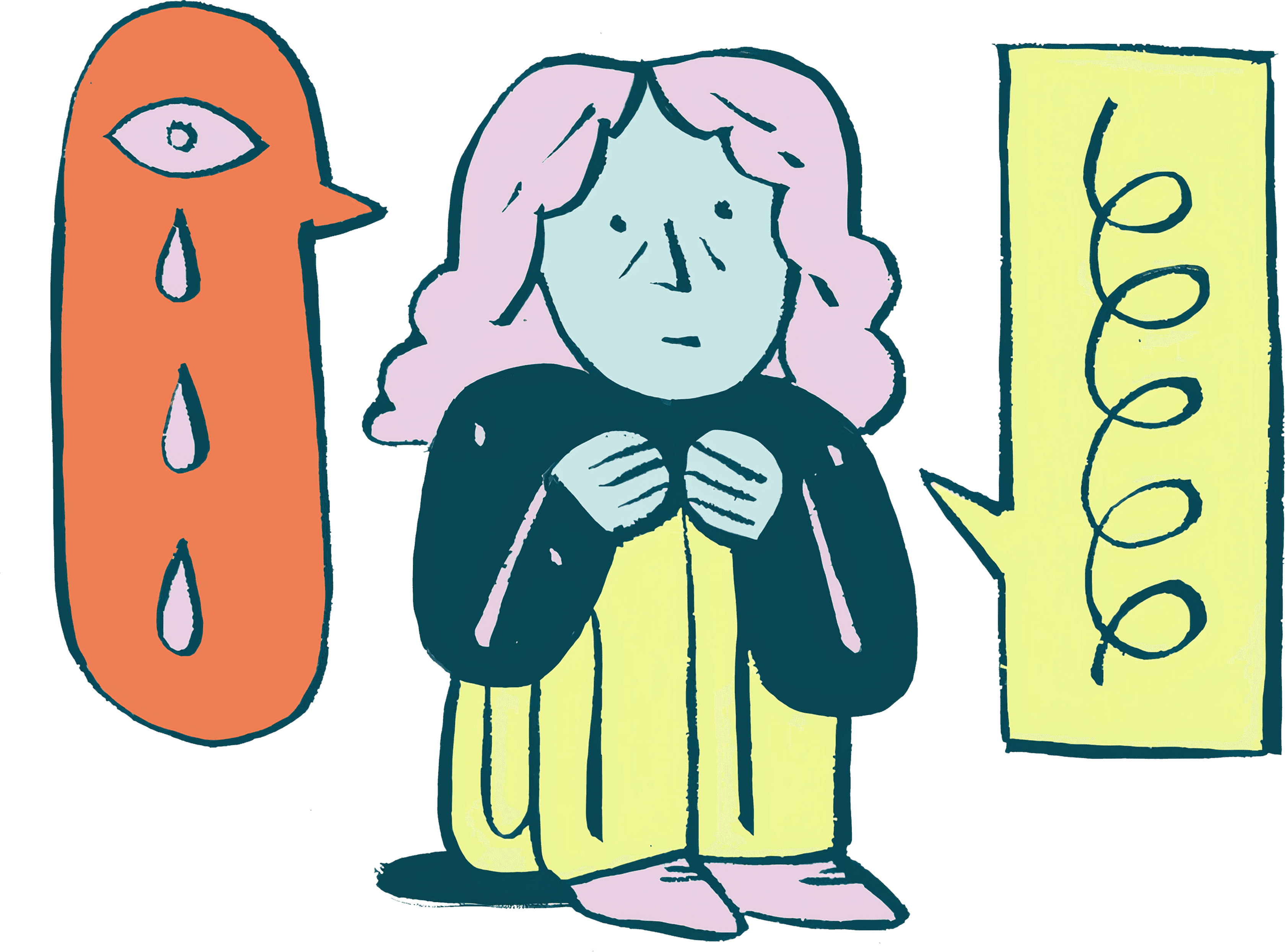
Imposter syndrome is like a critical little voice in your head that keeps trying to convince you that you don't deserve your success and that behind it isn't talent, but luck or coincidence.
When something goes well, you immediately brush it off – others would have managed it just as easily, or better. When you make a mistake, you replay it in your head long into the night – that's proof I'm worthless. I'm just good at hiding it.
This little voice is quite hard to ignore. It sounds convincingly real. Not even praise from your boss or a positive client review can drown it out.

Imposter syndrome affects up to 82% of us
A large meta-study found that around 9–82% of people doubt their own success. The range is so wide because imposter syndrome is not an official diagnosis. Results vary depending on how each study defined its parameters. The lower end applies to those of us for whom imposter syndrome is severely limiting and may have already caused an anxiety disorder or depression. The majority of us have experienced at least some symptoms.
Another large meta-study found that women experience imposter syndrome slightly more often, but it is more paralyzing for men. Men tend to reduce their effort and perform worse, while women are more likely to push harder after criticism.
Imposter syndrome doesn't discriminate and affects even highly capable and successful managers or academics. It really isn't proof that you're not good enough for your role – in fact, it often means quite the opposite.
Still don't believe us? :-) That's completely understandable. Let's verify it with a short test.
Imposter syndrome test: are you really a fraud?
These questions will help you find out whether your doubts are justified, or whether you're actually very capable and "simply" struggling with imposter syndrome.
- Do you receive positive feedback at work, even when you feel you don't deserve it?
- Have you completed projects or exams that went well?
- And do you still tell yourself it was just luck and that you managed to fool everyone again?
- If a colleague or friend submitted a project in the same state as yours, would you feel they had done well?
- Are you in your current position because someone consciously chose you, whether through an interview or a referral?
- When something doesn't go well, do you tell yourself it's proof of your incompetence, rather than a normal part of life?
- Do you genuinely care about the quality of your work and constantly try to learn and grow?
- Do you talk to yourself significantly more critically than your colleagues or managers talk to you?
- Do you often compare yourself to others and feel you need to measure up to them, even if they have ten more years of experience?
The more times you answered YES, the more likely you are struggling with imposter syndrome, which has nothing to do with real incompetence. Quite the opposite, in fact.
Why does this happen? Causes of imposter syndrome
Imposter syndrome often develops in childhood.
If your parents, for example, were overly critical of you or constantly compared you to your older sister, you may have lost track of what you're actually capable of. Or perhaps they constantly praised you for your performance and achievements. Later, things didn't come so easily anymore, and you learned to doubt yourself.
Starting a new job or even the type of career you choose can also play a role.
It's no coincidence that imposter syndrome often affects people in IT, creative, or academic professions, where it's not entirely clear what "a job well done" actually looks like. These fields also have an enormous number of recognised experts, and people feel they can never measure up.
How imposter syndrome slowly but surely complicates our lives
Feelings of inadequacy are a significant psychological burden. You may notice this in yourself. You might struggle with anxiety, extreme procrastination, stress, and insomnia from excessive workaholism, burnout, or you might even turn down a well-deserved promotion because you feel you don't deserve it.
The good news? It definitely doesn't have to stay this way.

How to work through imposter syndrome and maybe finally get rid of it
Our psychotherapists recommend these steps.
1. Acknowledge that you have imposter syndrome (and that it's okay)
Reading this article is a great first step. It makes sense that you won't get rid of imposter syndrome with a snap of your fingers. But simply recognising that it applies to you (and that you're not alone in it) can help you reduce it. You're beginning to understand that your feelings don't have to be objective reality, even if you don't fully believe that yet.
2. Talk about it with someone close to you
Our minds can sometimes serve up some pretty dark thoughts. But when you say your doubts out loud, they often lose their power. The next time your stomach knots at the thought that your boss wants to fire you, try sharing it with someone – you'll often realise for yourself that it might not sound entirely realistic.
3. Write down evidence of your achievements
We often find a thousand reasons why we're the most incompetent person around. Try doing the exact opposite. Start a journal or a folder on your computer and write down every tangible piece of evidence that something went well. Every compliment, successful campaign, kind comment, solved problem, promotion, or sales increase – it all belongs there.
The next time doubts creep back in, read through your list of achievements and see how far you've actually come.
4. Separate mistakes from your sense of self-worth
Simply never making a mistake is just not humanly possible. And it says nothing about your worth as a person. A mistake means one thing only: some part of the process didn't work. And that's normal.
It doesn't mean you lack talent or intelligence. Your work is simply an activity you do, not who you are. It's not possible to learn everything first and then do it right forever. Mistakes are part of the process.
5. Work on your self-confidence
Low self-confidence is like a sibling of imposter syndrome. They often develop together in childhood, when someone is overly critical or constantly comparing us. Take a look at ways to boost your self-confidence and finally start believing in yourself. It might be a lack of self-belief that keeps convincing you that you're not good enough.

6. Try to ease your perfectionism
If low self-confidence is the sibling of imposter syndrome, then perfectionism must be its identical twin. Maybe you know the feeling too. You'd rather stay up all night at your laptop than let the work be anything less than perfect. And even when it turns out well, you still feel it could have been better.
But this mindset is slowly wearing you down. Take a read on how to get rid of perfectionism and finally breathe. It helps, for example, to learn to tell yourself "enough" – the project is now functional, I don't need to spend another three hours refining it.
7. Talk to yourself like you would to a friend
If a friend had the same experiences as you, you certainly wouldn't tell them they're worthless. So why are you saying it to yourself? You're the one you spend every single minute with. When you turn your own mind into a supportive and encouraging place, you'll navigate both success and failure more easily.
If that idea sounds completely wild to you, have a look at our article on self-love. It's never too late to work on it – not at twenty, and not at fifty.
8. Reflect on where your thoughts come from
We know that digging into childhood can be quite painful. Or maybe you don't remember much of it. But try to reflect and recall when thoughts of your own incompetence first appeared.
Was it when a teacher put you down for being bad at maths? Or when your parents shouted at you over a poor grade?
Now try to imagine that someone is treating another small child this way. Maybe your own child. Do you feel they deserve it?
Probably not. And you didn't deserve it either. Maybe this will help you absorb the fact that your imposter syndrome has nothing to do with your abilities, but rather stems from this experience.

9. Try to stop comparing yourself to others
Comparing yourself to experts makes no sense. When they were starting out, they may well have been a hundred times worse off than you were a year ago.
It also makes no sense to compare yourself to people on social media. You never see the whole story – behind every success there can be a thousand failures, help from colleagues, or simply a different life experience.
Focus on yourself and on being better than the version of you from a year ago. That's the only thing that matters.
10. Learn to accept a compliment
People with imposter syndrome often struggle with this. They feel they don't deserve the compliment. How do you react?
The next time someone compliments you, don't brush it off. No "Oh come on, everyone helped me." No "It was such a simple task, anyone could have done it." Just say "thank you." Nothing more.
Therapy can help with imposter syndrome too
You really don't have to live with this pressure forever. It can be changed. A therapist can help you rework all those beliefs that keep you hunched over your work until the early hours and stop you from enjoying your hard-earned success. You can also explore the past and work out where your imposter syndrome came from. That alone often helps to reduce its power.
At Hedepy, among more than 160 verified psychotherapists, you'll definitely find the right one. To make it easier, we'll recommend the most suitable therapist for you based on a 5-minute test. You could have your first session within just a few days.
Thinking about therapy?

My First Therapy: How to Prepare and What to Expect

What is psychotherapy? And who is it for?

Does online therapy really work? Isn't face-to-face better?
Explore options


